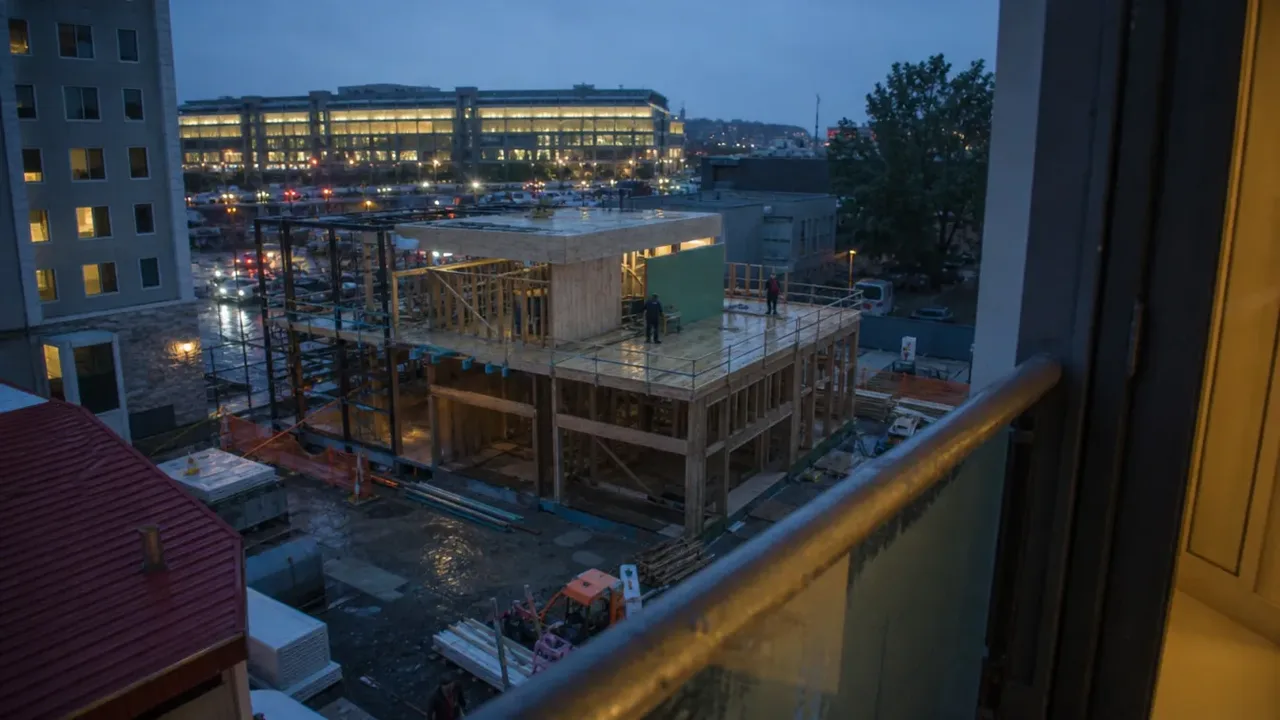
Somewhere in month two of a build-out there is a moment worth pausing on. The space is torn open, materials and half-installed equipment are sitting in it overnight, a subcontractor's grinder threw sparks near the old ceiling insulation that afternoon, and the owner needs a documented answer to a simple question: whose insurance covers this room tonight?
This guide maps the insurance layer of a build-out: the coverage that exists specifically for half-finished spaces, the liability stack around it, and the gaps that surface only after something burns, floods, or walks away. Put a commercial insurance broker who knows construction in the project directory from the first week, then use this map to make that conversation productive.
Builder's risk: the policy for the in-between
The core instrument is builder's risk (in Canada often "course of construction") insurance: property coverage written specifically for a project under construction or renovation. It typically covers the structure being worked on, materials and fixtures on site awaiting installation, and, if arranged, materials in transit and in off-site storage. It runs for the construction term and ends, importantly, around occupancy or completion, when a normal commercial property policy is supposed to take over.
Everything interesting about builder's risk lives in three questions. Who buys it, the owner or the contractor, is set by the construction contract; the standard AIA and CCDC families allocate it explicitly, and the worst outcome is both parties assuming the other one did. What value it covers: the limit should track the full completed value of the work, and it should be updated when change orders move that number materially. What it excludes: read for water damage categories, theft conditions (site security requirements that, unmet, void the coverage), and whether existing structure is covered in a renovation, which for the second-generation spaces we cover constantly is most of the building.
The tenant-project wrinkle
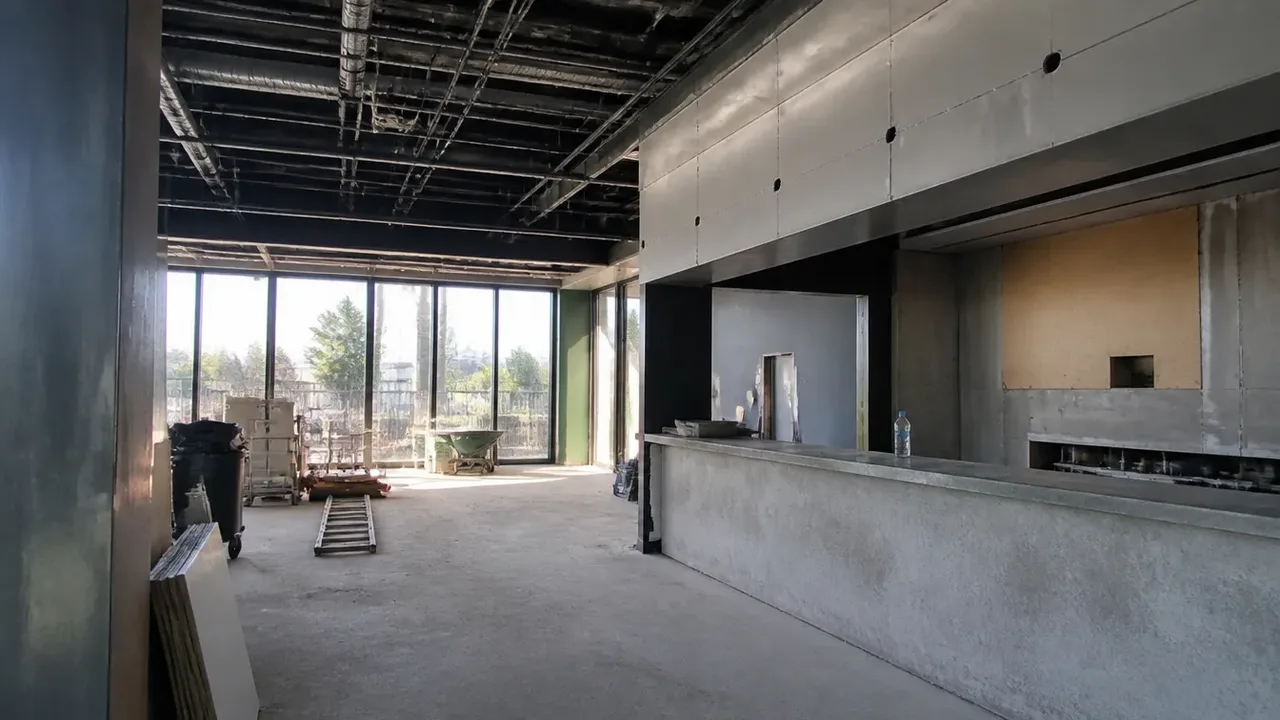
Most hospitality build-outs are tenant improvements inside someone else's building, which layers the question. The landlord's property policy covers the building shell; it does not cover your improvements in progress. Your future business property policy does not exist yet. The gap between them is precisely the value you are creating, and it is the gap builder's risk exists to fill. Check the lease and the work letter: landlords routinely require tenant-side builder's risk and specific liability limits, and require proof before allowing work to start. Treat those requirements as a floor, not a ceiling.
The liability stack
Property coverage protects the stuff; liability protects you from everyone else's bad day. The build-out stack, briefly:
- The contractor's commercial general liability, covering injury and damage arising from their operations. You want limits appropriate to the project and, the part first-timers miss, you want to be named as additional insured on it, so their policy defends you too when their scaffold meets a passerby.
- Workers' compensation, carried by every employer on site, verified for every sub. An uninsured sub's injured worker becomes, through mechanisms that vary by state and province, remarkably good at finding the owner's wallet. Regulators (state boards in the US, provincial bodies like WorkSafeBC in Canada) treat this as non-negotiable, and so should you; workplace-safety context from OSHA and the CCOHS is worth an owner's afternoon regardless.
- Your own liability policy for the entity that signed the lease, because the entity has exposures the contractor's policy will never cover: the delivery you accepted personally, the investor you walked through the site.
A certificate of insurance is useful evidence of the policies listed on the date it is issued, but it is not the policy and does not create coverage or additional-insured rights. State insurance regulators say this explicitly. Collect current certificates from the GC and subcontractors before work starts, then have the broker confirm the actual policy provisions and required endorsements, including additional-insured and waiver-of-subrogation language. Diarize policy expirations and renewals during the project.
The FF&E gap
Now the hospitality-specific FF&E gap. Furniture, fixtures, and equipment can spend months moving through a factory, container, freight terminal, warehouse, and truck. Who bears risk and what insurance applies at each stop depends on the purchase terms, bill of lading, carrier agreement, warehouse agreement, declared value, and policy endorsements. The answers belong in writing, shipment lane by shipment lane, before deposits go out. Confirm whether builder's risk includes off-site storage and transit or whether separate coverage is required; do not assume carrier or warehouse liability equals replacement value.
The handover nobody schedules
Last field note: coverage has its own punch list. Builder's risk ends, at occupancy, at completion, at a policy date, and the permanent program (commercial property, liability, business interruption, liquor liability where relevant) must begin without a seam. The seam weeks are exactly the weeks of punch-list chaos, staged FF&E, training staff, and first deliveries: maximum value in the room, maximum activity, and, on unmanaged projects, a coverage map nobody has looked at since month one. Put "insurance transition" on the pre-opening checklist as a named task with a date, and have the broker paper it before the first training shift, not after.
The half-finished room is the most exposed your business will ever be: all of the value, none of the revenue, and a dozen trades' worth of other people's risk moving through it daily. The paper that protects it is dull beyond description. Read it anyway, or pay someone who loves reading it, which is, in the end, what brokers are for.
The owner's one-page insurance map
The practical artifact this all rolls up into is a single page, drafted with the broker at kickoff and updated at each phase change. It covers every policy touching the project, who holds it, its limits, its dates, and which physical things and activities it covers. Down the left, the phases: demolition, construction, FF&E transit and storage, installation, pre-opening, open. Across each phase, the question answered in writing: what is covered, by whose paper, and where the certificates live. The exercise takes an hour, exposes every seam while seams are still cheap, and gives the project something it otherwise never has: one person who can answer, on any given night, the question this piece opened with. Half-finished rooms do fine when someone can answer it. It is the shrug that gets expensive.
Dull paper, priceless nights: that is the whole insurance beat in five words.
Put the map on the wall next to the schedule, and review both with the same monthly seriousness; the project is only as protected as the older of the two documents.