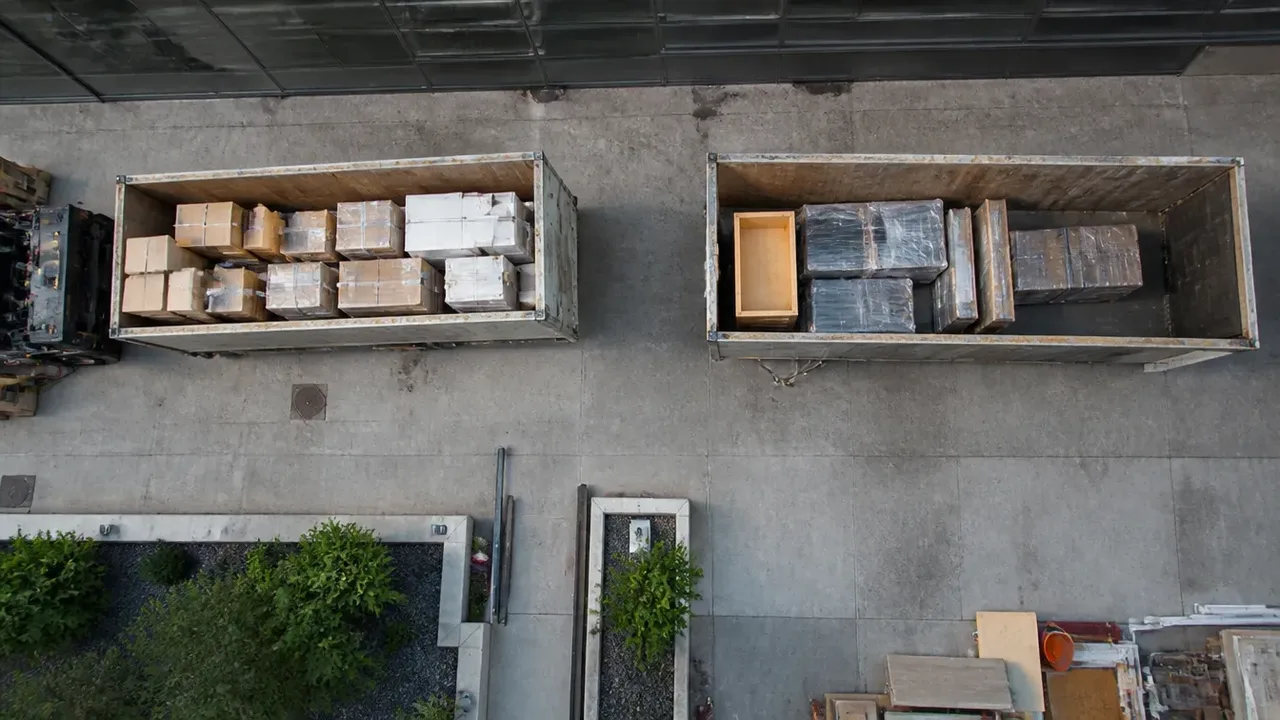
“Plywood crate” tells you about one material. It may leave out the timber base, internal blocking or loose wood used to secure the load. Before furniture is packed for import into the United States, ask the supplier to identify those parts separately and give the importer or broker the actual packing arrangement to review.
The decision belongs before export, while the packing provider can answer questions and change an unresolved component. Keep this review beside the furniture order, rather than expecting the receiving team to settle it when the shipment reaches the property.
Break the packing into its actual materials
Request a packing drawing or component description for the furniture being shipped. Ask what the crate faces, frame, base, internal supports and separate dunnage are made from. Dunnage is material used to support or secure the cargo; it may be separate from the crate visible in a product photograph.
APHIS's U.S. wood-packaging guidance includes pallets, skids, crates and dunnage among the packaging types to review. It also lists plywood and oriented strand board among alternatives outside its wood-packaging regulation. That distinction applies to the identified material. It does not establish the status of every part attached to a plywood sheet.
The IPPC's ISPM 15 description similarly distinguishes raw-wood packaging from processed material such as plywood. Have the importer or broker confirm the current requirements and any applicable exceptions for the actual origin, route, materials and shipment. Do not use the label “export crate” as the result of that review.
For an invented example, a supplier proposes a crate with plywood faces, two solid-lumber base rails and solid-wood internal blocks. The faces' material description does not identify the treatment or marking of the rails and blocks. Ask for those components' information before accepting a statement that the crate is exempt because it is plywood.
Ask questions the packing provider can answer
Use a component list to close the material gaps:
| Packing component | Information to request |
|---|---|
| Faces and lid | Actual sheet material, rather than “wood panel” |
| Frame and base | Material for rails, runners, posts and other structural parts |
| Internal supports | Material used to block or brace the furniture inside |
| Pallet or skid | Its identity and applicable treatment/marking information |
| Separate load-securing material | Any wood added around or between the packed units |
Ask who supplies and prepares each regulated component. The furniture factory may buy finished crates or use a separate packing operation. Get the answer for the provider actually handling this order, not just a certificate from an unrelated facility in the supplier's general presentation.
Where regulated wood packaging will be used, APHIS advises importers to use accredited providers and review the exporting country's national plant protection organization evidence. Give those details to the person responsible for the import review. Keep an unresolved provider or material response marked as unresolved.
Check the actual mark and the assembled packing
Ask for clear photographs of the applicable treatment marks and their locations on the packing prepared for your shipment. Tie those images to the packing units or shipment references. A sample mark on another order is useful for explaining a process but does not identify this shipment's packing.
APHIS identifies the IPPC logo, country code, facility identifier and treatment code as mark information inspectors examine. Have the responsible reviewer check the applicable code and marking arrangement for the actual packaging. Do not invent a requirement for a separate stamp on every block or tell the supplier to place an unofficial logo on unverified wood.
Have the provider show the base and supports before they are concealed, where this can be done through its approved packing process. Then reconcile the assembled packing with the agreed material list. A photograph can show which parts need an answer; it cannot by itself establish that treatment occurred or guarantee admission.
The IPPC description also makes clear that the specified phytosanitary measures do not provide continuing protection against later contamination. Keep the exporter’s inspection of the packing before use part of the agreed process, as APHIS recommends. A treatment mark should not end every subsequent condition check.
Carry the review through changes
If the supplier changes the base, adds blocks or repacks the goods, ask whether the accepted packing information still applies. Refer the changed arrangement to the importer or broker before release. Adding raw-wood supports to processed-board packing introduces a question the original description may not have answered.
Keep the agreed materials, provider evidence, actual mark photographs, reviewer response and unresolved items linked to the shipment in the FF&E matrix. This is a focused packing record. The matrix still carries the separate product, quantity, approval and delivery decisions.
Do not infer that a processed packing alternative protects the furniture adequately for its journey. Ask the supplier and logistics team to confirm protection, handling and load-securing requirements separately. Pest-control scope and freight-damage protection are different parts of the specification.
Give an exception to the responsible import team
If a material, mark or provider cannot be confirmed before export, send the exact gap to the importer or broker and obtain its next action. Keep the supplier's shipment target separate from that unresolved review.
If authorities issue an Emergency Action Notification, follow that notice with the responsible import team. APHIS directs importers to coordinate the specific violation and corrective action with CBP and APHIS. Do not assume that replacing packing at the hotel will resolve an official hold, or predict one automatic remedy for every shipment.
Use the freight and receiving plan for the downstream appointment, access and inspection arrangements. Its receiving checks need the accepted shipment records. The practical result of this earlier review is that “plywood crate” has become an identified packing assembly, with its raw-wood questions answered by the responsible parties before the furniture leaves.