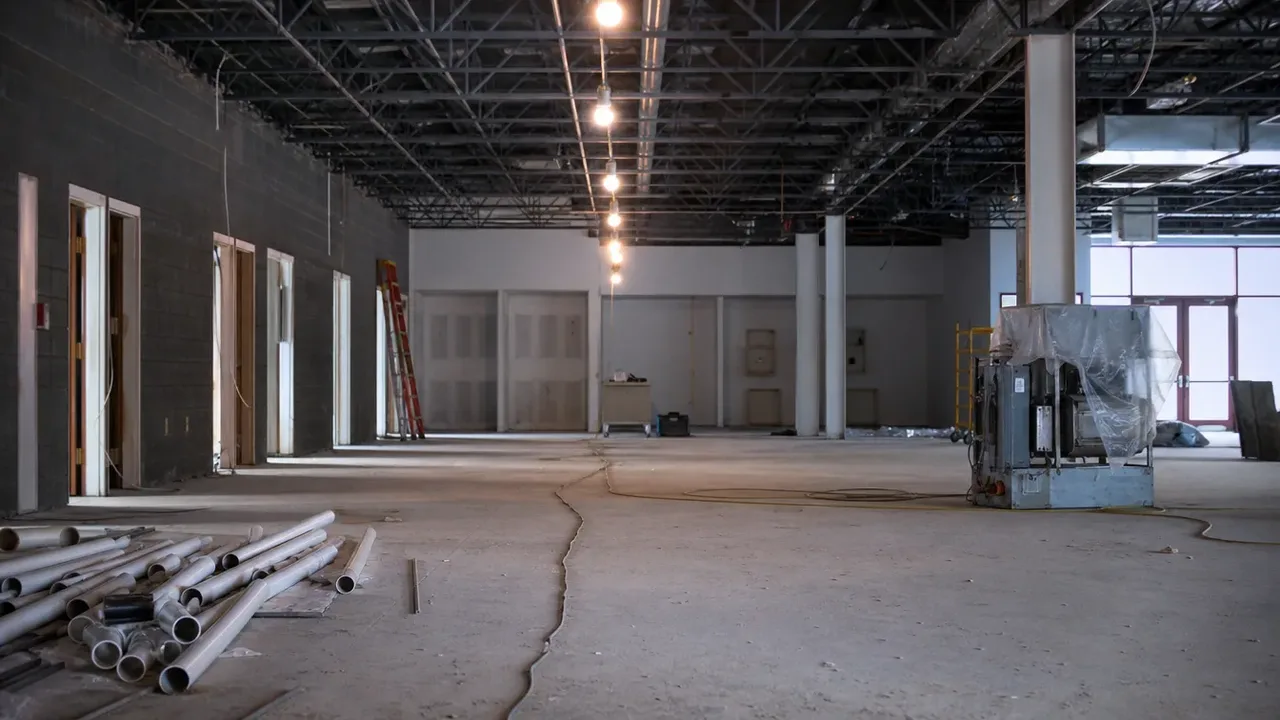
Furniture is purchased over a leisurely quarter and arrives in a violent week. That asymmetry is the last mile of every FF&E program: months of careful specification funneling into a few days of trucks, liftgates, cardboard mountains, and decisions made at forklift speed. It is also where an astonishing share of FF&E budgets quietly leak: in damage discovered too late to claim, in redeliveries, in crews standing idle behind a locked dock, in the chaos tax of a week nobody planned because everyone assumed delivery was the vendor's problem.
Responsibility after goods leave the factory depends on the purchase order, shipping term, bill of lading, carrier agreement, governing law, and insurance. Read them before shipment; do not infer risk transfer from a delivery label alone.
A destination is more useful than a room total on a receiving list. Compare the Illinois floor-by-floor allocation with the North Carolina destination-labelled package before preparing room labels and the installation sequence.
Freight: the part you agreed to in the fine print
Start with the purchase order's shipping terms. A stated FOB point can affect delivery obligations, title, and risk, but its legal effect depends on the transaction and governing law; Incoterms are a separate contractual framework used in international trade. Have the purchasing and logistics team record the actual term, carrier, declared value, accessorial charges, claim process, and insurance for every order in the FF&E matrix.
Claims are governed by the applicable bill of lading, carrier rules, contract, and law. For US interstate motor-carrier shipments covered by the Carmack Amendment, a carrier cannot set a claim-filing period shorter than nine months, but a valid claim still must meet formal requirements; 49 CFR 1005.2 says a damage notation or inspection report alone is not a filed claim. Inspect promptly, note visible exceptions on the receipt, preserve packaging and photographs, and submit the required written claim within the controlling deadline.
Receiving: a job, not an event
Hence the discipline. Receiving is a named job with a trained person, not a thing that happens to whoever is standing near the door. The routine:
- Count everything against the packing list and the matrix. Cartons, not just pallets; shrink-wrap hides shortages.
- Inspect before signing. Open or probe anything suspicious. Damage and shortage are noted on the delivery receipt, specifically ("carton 7 crushed, contents unverified" beats "damage"), photographed, and signed by both parties.
- Record uncertainty accurately. A specific exception is useful evidence, but it does not by itself preserve or perfect a claim. Follow the contract's notice and filing process immediately.
- Log it in the matrix within the hour: received, damaged, short, staged where. The matrix's receiving columns are the installation plan's raw material.
One structural decision upstream shapes all of this: warehouse versus direct-to-site. Direct-to-site is cheaper on paper and works when the site is genuinely ready: dock or access confirmed, floor protection down, staging space cleared, construction actually finished in receiving areas. But FF&E ordered months ahead arrives on the factory's schedule, not the site's, and goods landing in an active construction zone get damaged by the building that is being finished around them. A receiving warehouse, the consolidated model hotels formalize through purchasing agents and dedicated FF&E warehousing, costs real money and buys inspection on arrival (starting claims clocks early, when they are winnable), storage off the critical path, and a single orchestrated delivery to site. For any program bigger than a few truckloads, price it before defaulting to direct.
Installation week
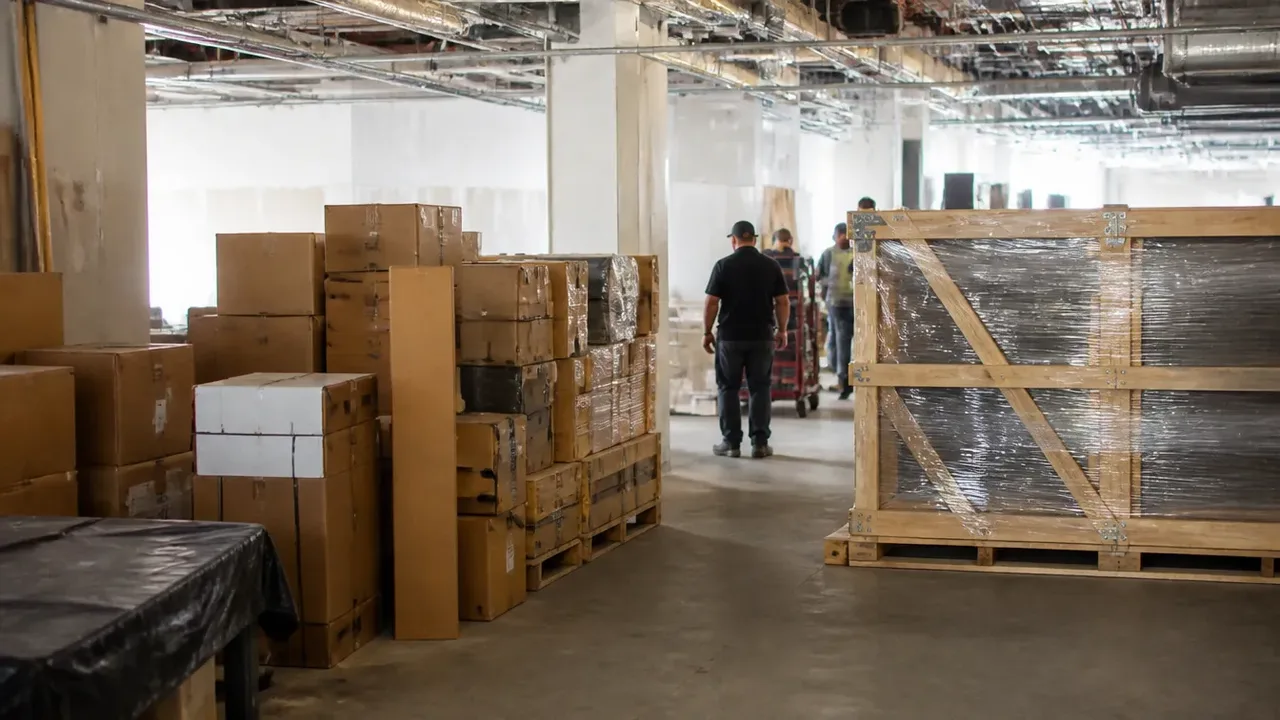
Then the week itself rewards being planned like a small military operation, because it is one. Multiple trucks, multiple crews, one loading path, finite elevator slots, and a building full of other people's finished surfaces.
- Sequence by geography and trade. Heavy and back-of-room first: millwork and banquettes before loose tables, tables before chairs, art and mirrors last. Rooms complete in waves rather than everything everywhere.
- Protect the building. Floor protection on the path, corner guards, elevator pads. Install crews scratching week-old floors is common enough to plan against directly.
- Assign the map. Decide every crate's destination before the truck opens: the matrix's room column, printed and available to the receiving team.
- Punch as you place. A wobble, a mis-drilled hole, a wrong finish: logged item-by-item in the matrix on placement day, while install crews are still on site and vendors still attentive: the same logic as construction punch lists, at furniture scale.
- Plan the cardboard. A furnished restaurant generates a startling cubic volume of packaging. Dumpster capacity, breakdown labor, and recycling rules are a real line in the week's plan, or they become the week's dominant physical fact.

How it can unfold
How it can unfold: an operator ships direct to a site that finishes late. Trucks incur rescheduling charges, cartons wait in an active construction zone, and concealed damage is discovered after delivery. The team then learns that its delivery notations did not satisfy the carrier's formal claim process. The lesson is not a universal deadline or cost multiplier: it is to match delivery timing to site readiness and document the controlling claim rules before freight moves.

The paper that survives the week
A closing note on documentation, because the week's output is not just a furnished room. It is a file. Signed delivery receipts with their notations; photographs, timestamped, of every exception; the claims correspondence and its deadlines diarized; the install-punch list and its resolution; and the final matrix, updated to as-installed reality. That file is the warranty program's index, the insurance schedule's evidence, and the source of truth when the vendor's replacement arrives in week six for a chair whose damage was, or was not, noted in the driver's presence. Teams that assign the receiving job also assign the file, and it takes the receiver perhaps twenty minutes a day to keep. Teams that do neither discover, at claim time, that the week which installed the entire movable layer of their business left behind no admissible memory of itself. Freight forgets nothing and forgives nothing; the file is how you argue with it, and the week is the only time the file can be written.
Months to buy, days to land, years to live with: the last mile is where all three tenses of the FF&E program meet, and the only one of them you can still influence on delivery morning is the paperwork. Write it down.
The dock is a courtroom with a forklift. Arrive with a plan and a pen.