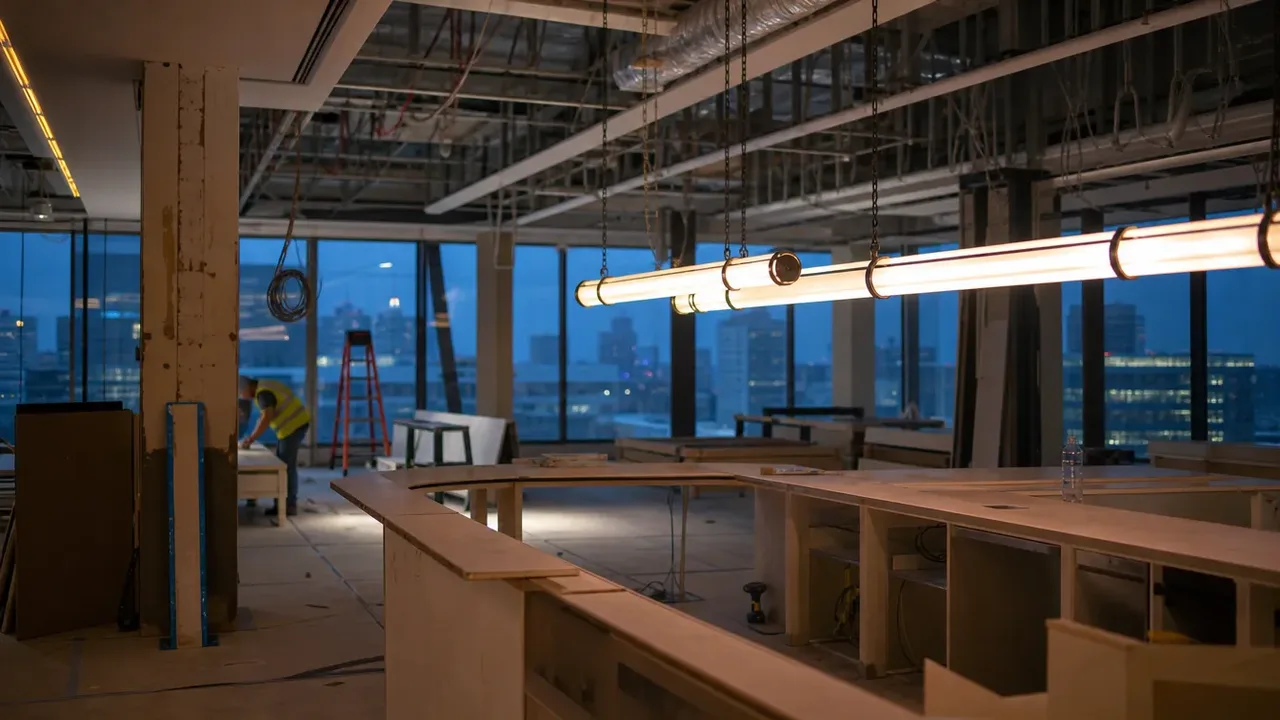
Every hospitality interior has a trade that carries its identity, and more often than not it is millwork: the bar die and its top, the back-bar shelving, the banquettes, the host stand, the wine wall, the community table: the built things guests actually touch. Designers draw these pieces lovingly. Owners approve them emotionally. And schedulers watch them arrive last, install long, and quietly become the thing the opening date is actually waiting for.
These are field notes on why the prettiest trade is so reliably the pacing one, and on the management habits that keep the woodshop from running your calendar.
Why millwork behaves differently
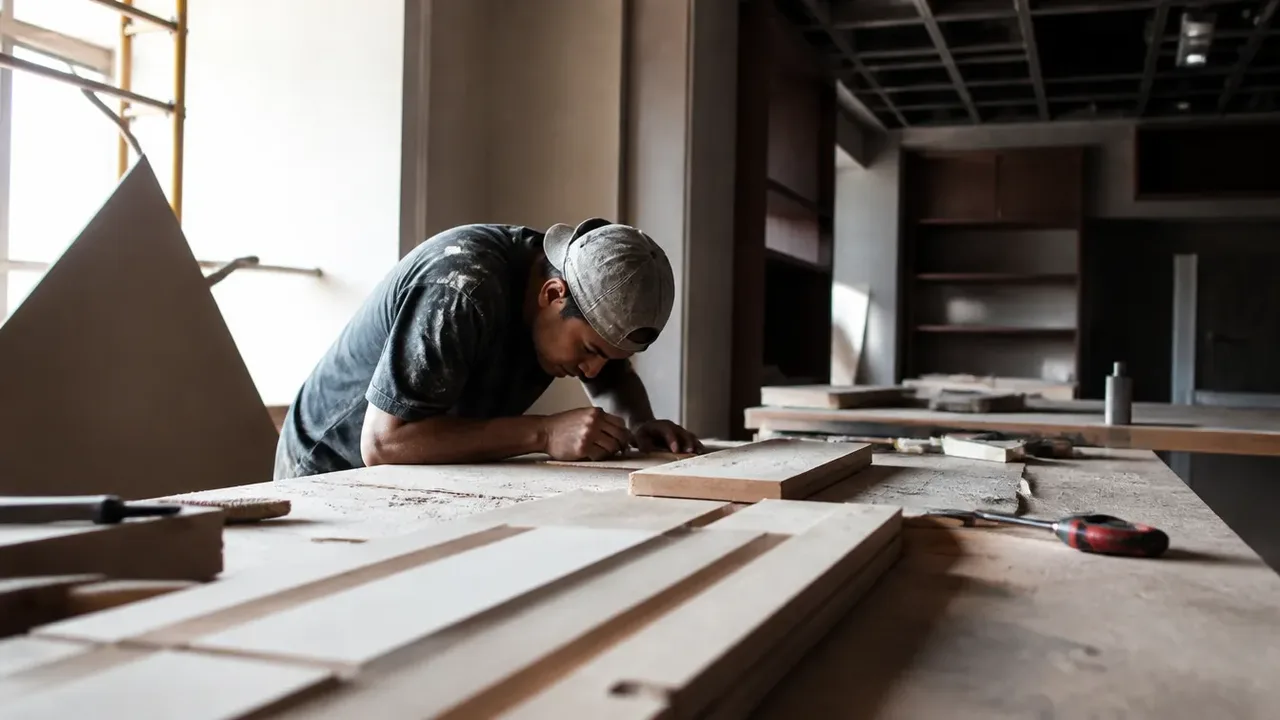
Most trades on a fit-out install products: fixtures, panels, equipment made elsewhere in quantity. Millwork is the trade where the project commissions manufacturing: one-off pieces, designed for this room, fabricated in a shop that is itself a small factory with its own queue, then delivered and fitted to walls that are never quite where the drawings said. Four consequences follow.
The shop-drawing loop is a real phase. The designer's drawings are intent; the shop produces its own fabrication drawings, which come back for approval before a board is cut. That loop (draw, review, revise, approve) takes real weeks and involves the owner's side keeping review-turnaround promises it usually has not scheduled. Every week the approval sits in an inbox is a week added to the far end, where there is no float left to pay for it.
Fabrication wants final conditions. A good shop field-measures before cutting, which means the walls that millwork touches must exist first. This couples the shop's start date to the framing and drywall schedule; a slipping site slips the shop, and the shop's next slot may be weeks out, in exactly the remobilization pattern that governs crews. The alternative, fabricating from drawings to save time, trades schedule for fit risk, and scribing ill-fitting casework to a wavy wall on site is the slowest work in carpentry.
Finishing is chemistry, not hustle. Stains, lacquers, and oils cure on their own clock, coat by coat, in a controlled shop environment. Finish time compresses badly, and rushed finishing is visible to every guest forever. This is also the argument for shop-finishing over site-finishing wherever design allows: the shop's booth beats a dusty site on quality and the schedule simultaneously.
The install is surgery in a finished room. Millwork lands late by nature, after floors, paint, and most trades, into the most finished, most damageable version of the space, often in the same crowded weeks as FF&E installation and the inspection finals. Big pieces have a further indignity available: not fitting through the door. Veterans measure the access path (doorways, corners, elevator cabs) during design, and build oversized pieces in sections accordingly. The bar top that cannot reach the bar is an avoidable planning failure.
The money shape
Budget-wise, millwork is a classic underestimate. The drawings show furniture-like objects; the invoice prices manufacturing: materials (with hardwood and sheet-good prices moving on their own markets), shop labor, finishing, hardware (the hinges and slides that separate casework that lasts from casework that sags) plus delivery, install labor, and the site fitting. Substrate and species substitutions are the legitimate value-engineering lever, and the contract-grade logic applies with full force: surfaces that take commercial abuse (bar tops, table edges, banquette caps) earn the durable spec; surfaces that only get looked at can economize. Cutting hardware quality is the false economy in the file. It is the moving parts that fail.
The procurement structure matters too. Millwork can sit inside the GC's contract (one throat to choke, a markup attached) or come direct from the shop to you (cheaper on paper, coordination risk yours: the fit at the wall becomes a boundary dispute between your shop and the GC's drywall). Either works; ambiguity between them does not. Decide at buyout, in writing, including who field-measures and who pays for misfit.
Keeping the shop off your critical path
The habits, compressed from the planning framework:
- Buy millwork early: with the long leads, not the finishes. The shop's queue plus drawings plus fabrication plus finishing is routinely one of the longest chains on the job, in the same tier as the hood package. Treat it that way in procurement order.
- Schedule the shop-drawing loop by name. Submission date, review turnaround, approval date: on the master schedule, with the owner-side reviews on the decision calendar.
- Protect the field-measure date. It is the coupling point between site and shop; defend the drywall milestone that enables it the way you defend inspection dates.
- Ask the shop for its schedule, monthly. Shops queue like every fabricator; a shop that went quiet is a shop whose queue moved. The question "is our slot still our slot?" costs one email.
- Sequence the install deliberately. Millwork before loose FF&E, floor protection down, one crew's clear window rather than the everything-at-once scrum of a panicked final month.
How it can unfold: a project whose framing slipped two weeks in March delivers its walls to the field-measurer in April, whose shop slot has moved to June, whose finished bar therefore lands in July, three weeks after the tables and one week after the intended opening, and the room everyone photographs on opening night is the room that set the date. Millwork rewards exactly one thing: being taken seriously early. Do that, and the trade that defines your room stays what it should be: the best thing in the building, instead of the last.
Choosing the shop
A closing note on selection, because the variance between millwork shops is wider than in almost any other trade. The portfolio tells you about taste; the questions that predict your schedule are operational. How many projects share the shop's floor right now, and where would yours slot? Who draws the shop drawings, and what turnaround do they quote? Does the shop finish in-house or send work out, and if out, whose queue is that? Have they built for commercial hospitality, where the durability standard is a different sport from residential? Will they field-measure themselves, and do they warrant fit? A shop with beautiful photographs and vague answers to those questions is a residential shop about to learn commercial lessons on your calendar. A shop with crisp answers and a binder of hospitality installs is buying you certainty that is worth a real premium, because in this trade, as the whole file shows, the schedule is the product as much as the woodwork is.
One more habit of the seasoned: visit the shop mid-fabrication. An hour among the clamps verifies progress better than any email, builds the relationship that gets your callback prioritized in year two when a banquette cap splits, and is, not incidentally, one of the genuine pleasures of building a room worth opening.
The shop's clock starts when the drawings are approved and the walls exist. Everything an owner controls about millwork happens before those two moments, which is exactly why it feels, too late, like it happened to you.