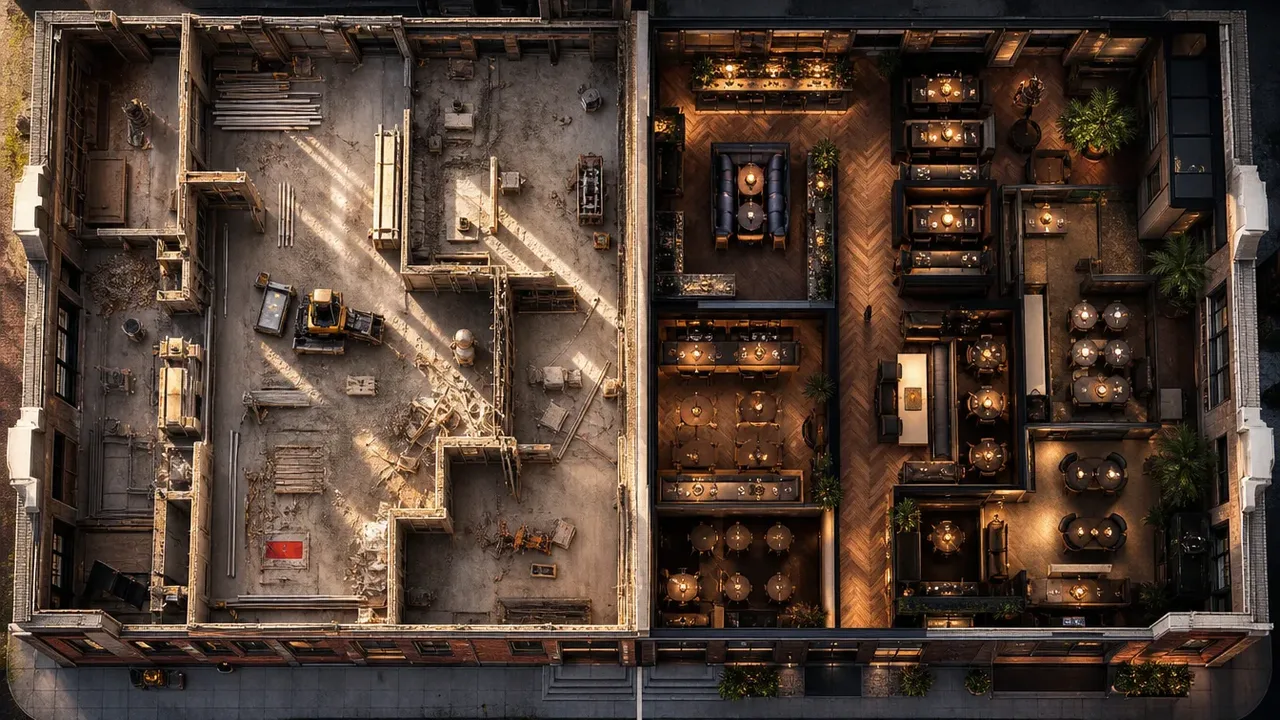
Hospitality loves an old building the way sailors love the sea, genuinely, and with insufficient respect for what it can do to you. The bank lobby that becomes a cocktail room, the mill that becomes a boutique hotel, the firehouse brewery, the chapel event hall: adaptive reuse produces the most memorable venues in the industry, rooms with the kind of character no FF&E budget can purchase, in buildings that often anchor the neighborhoods hospitality wants to be in. It is also the build-out category with the widest gap between the budget as signed and the budget as lived, because an old building is not a site. It is a negotiation with a previous century, conducted through walls that answer questions only when opened.
These are the field notes: where the surprises actually live, what the law does at the moment of conversion, and the small set of practices that separate the triumphs from the cautionary tales.
Record the furniture that already belongs to the project. The Pennsylvania retained, moved and new inventory separates those decisions, while the Michigan stored-furniture plan makes pieces in storage visible before replacements are ordered.
The change-of-use moment
The legal mechanics first, because they are the least intuitive. Old buildings enjoy a kind of regulatory peace, legally continuing under the codes of their era, that ends at a specific moment: the change of use. Convert a bank to a bar, a warehouse to a hotel, and the building must generally meet the requirements of its new use, and the new use is almost always more demanding: hospitality means crowds (the assembly threshold), sleeping guests (the strictest life-safety chapter of all), commercial kitchens (hood paths through historic roofs), and accessibility obligations the 1920s never drew. Modern codes soften the collision with dedicated provisions for existing buildings (compliance-alternative frameworks in the ICC families and their Canadian counterparts exist precisely to make reuse feasible) but softened is not waived: the conversion triggers structural review, egress redesign, fire-protection retrofits (the sprinkler question in a heavy-timber or plaster building is a project in itself), and energy compliance, all administered through a permit review that will read the whole building, not just your tenancy. Layer historic designation on top (with its design-review boards, its material requirements, and its preservation tax-credit programs administered through the National Park Service in the US, real money with real strings) and the approvals calendar becomes the project's longest lead item, ahead of anything on a truck.
Where the money actually hides
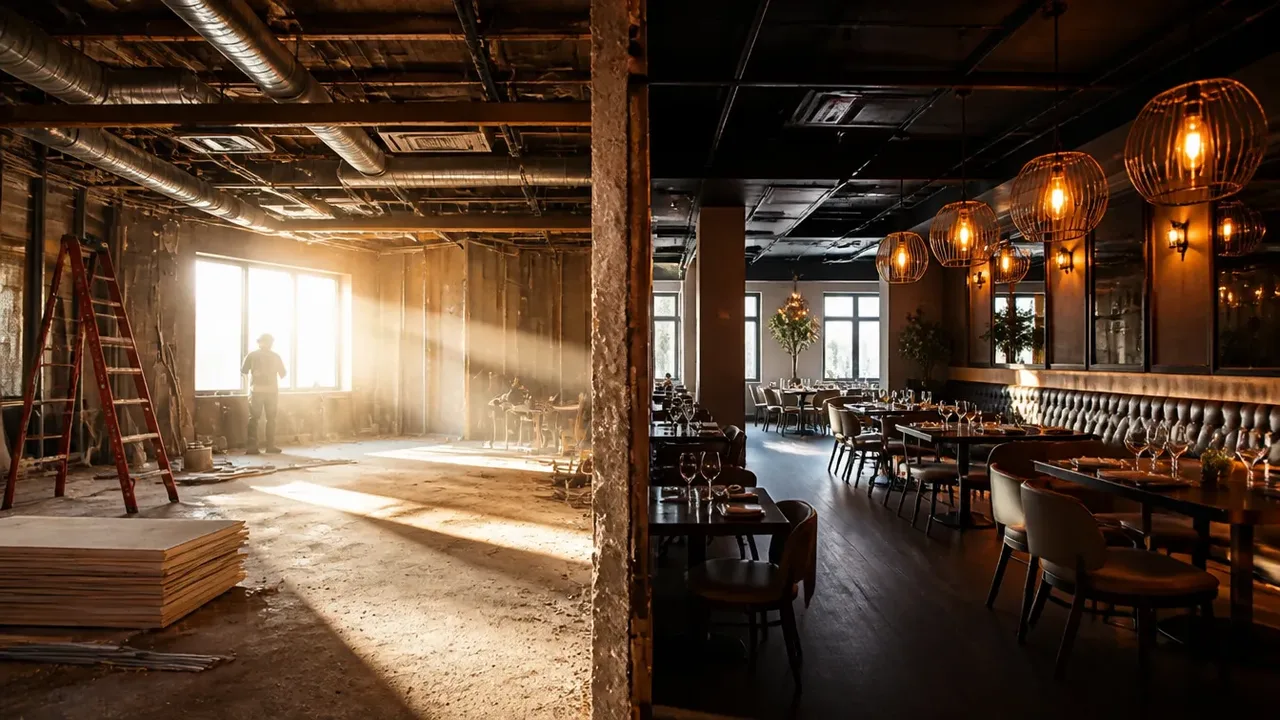
The construction surprises cluster with remarkable consistency, and the file sorts them into three strata. The structure you inherit: floors sized for filing cabinets asked to hold fermentation tanks or banquet crowds; masonry walls that carry the building but resist every new opening; foundations that predate the water table's current opinions. The systems that must be original-sinned away: knob-and-tube wiring, galvanized or lead water service, sewer laterals of vintage clay, heating plants of museum interest, and the environmental layer (asbestos, lead paint, buried tanks) whose abatement is a licensed, regulated, unhurryable trade of its own. The geometry that fights the program: floor-to-floor heights that pinch modern ductwork, window rhythms that dictate the room layout, stairs in the wrong place and elevators in none, and the back-of-house vascular system that must be threaded through a building drawn before service corridors were a discipline. None of these is exotic; all are invisible from the sidewalk, which is why the reuse budget's honest shape differs from new construction: less in finishes, the building donates the character, and dramatically more in structure, systems, and contingency, carried at percentages that would look paranoid on a shell space and prove merely adequate here.
The practices that pay
The doctrine, compressed from the survivors:
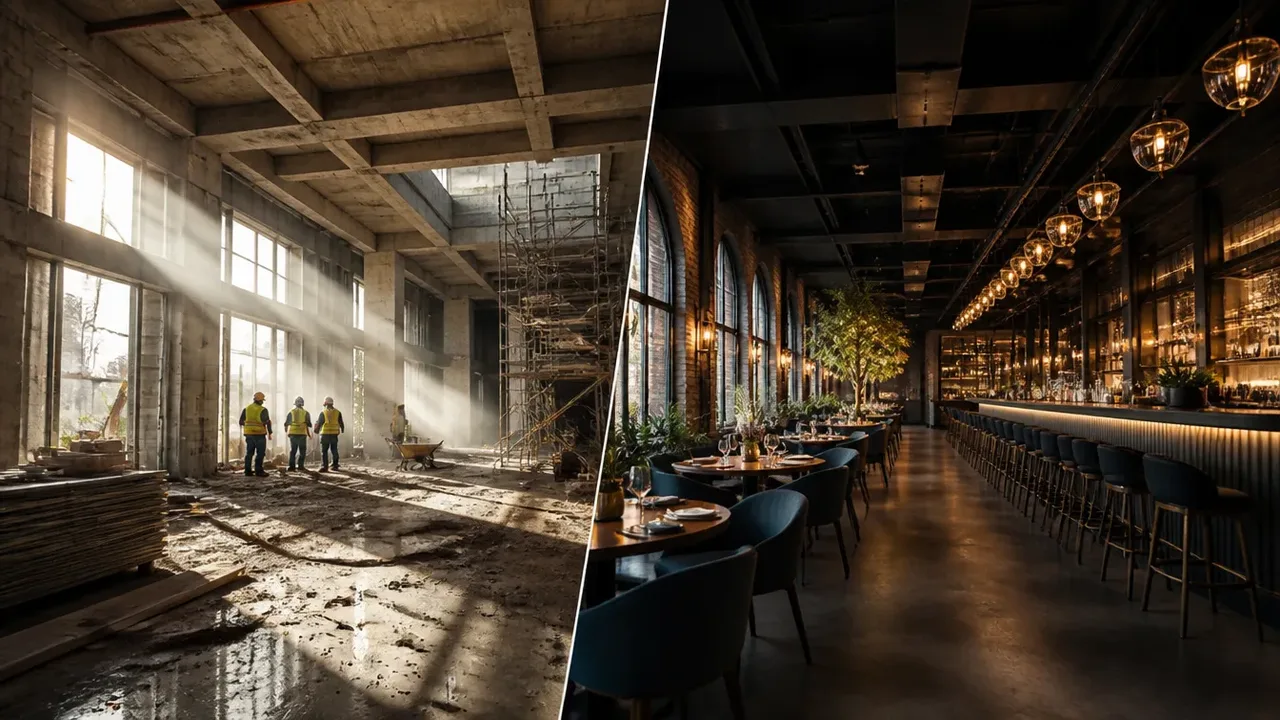
- Buy the investigation before the building. Structural assessment, hazardous-materials survey, systems evaluation, sewer camera, and, worth its fee many times over, selective destructive investigation: opening walls and floors at agreed points during due diligence. The second-generation diligence rule at full scale: the best-priced fortnight in the project, again.
- Hire the trades that love old buildings. Reuse rewards the architect with a code-alternatives track record, the engineer fluent in archaic structural systems, the GC whose subs have met plaster before. Generic teams price old buildings as new ones with demolition: an estimate that routinely understates the work.
- Design with the building, not at it. The projects that finish on budget let the structure vote early: the room layout follows the windows, the bar lands where the vault already is, the millwork wraps the columns nobody can move. Fighting the building is bought by the pound.
- Phase the discoveries. Open everything openable before finalizing the buyout: an early demolition-and-investigation package, priced separately, converts unknowns into change-orders-that-never-happen and lets the real contract price real conditions.
- Protect the schedule's soft tissue. Reuse timelines slip at the front (approvals, surprises), so hold the announcement discipline harder than usual, and keep the pre-opening machine decoupled from construction optimism.
The reward, for the projects that respect all of it, is the thing no new building can counterfeit: a venue with a past, rooms whose character was earned by someone else's century and inherited, legitimately, by yours. The old building was never the risk. The unexamined old building was, and the difference between them, as everywhere in this journal, is a survey, a specialist, and the patience to ask the walls before signing what they know.
How it can unfold
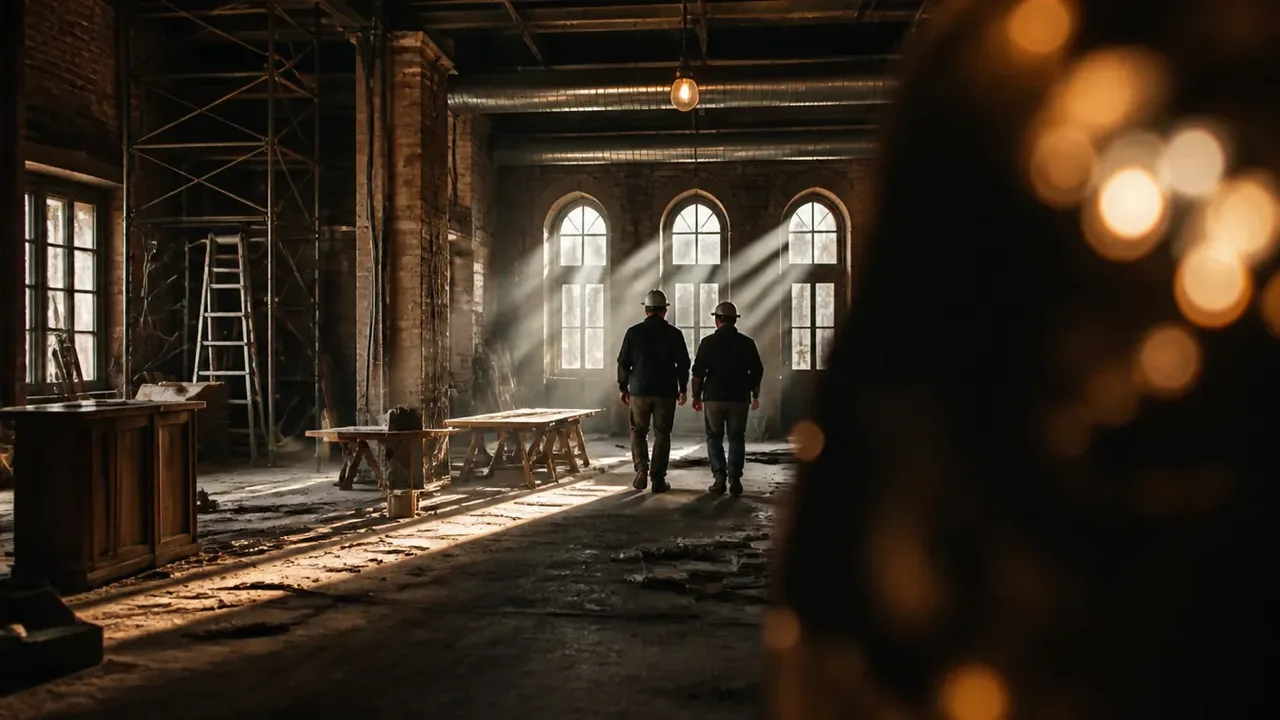
How it can unfold: a partnership buys a handsome 1910s commercial building for a boutique hotel: sound roof, gorgeous bones, a price that flattered the pro forma. The investigation budget, trimmed in the excitement, ran to a walkthrough and a clean phase-one report. The building then testified in its own order: asbestos wrap on the heating mains (abatement, eight weeks, licensed crews); a sewer lateral of collapsed clay (the street opened, the city involved); floor framing a half-grade short of hotel corridor loads (steel, and the ceiling heights that steel consumed); and a change-of-use egress review that took the back quarter of every floor for a second stair. The character survived. The finished hotel is, in fact, the loveliest thing its owners have built, but the budget closed at half again its signature number, and the schedule crossed two seasons it had never planned to meet. The scenario illustrates a useful comparison: the destructive investigation the partners declined would have cost roughly one week of what the surprises billed. Old buildings do not ambush anyone. They answer exactly the questions they are asked, at the moment they are asked, and the only expensive questions are the ones saved for after the closing.
Ask early, ask everything, and let the century you are inheriting set the terms it was always going to set anyway: on paper, at diligence prices, instead of in change orders at the building's convenience. That is adaptive reuse, done the way its best rooms were earned: with respect for the negotiation, and a surveyor's flashlight ahead of every signature.
Character is the one line item that appreciates; everything else in the old building depreciates on schedules the survey can read. Buy accordingly.
The walls are patient. They have waited a century; they will wait for your surveyor.